
Thatch Roofing in Britain: A Tale Woven Through Time
- lucian alixei
- Sep 12, 2023
- 4 min read


Introduction: When you think of a quintessential English countryside scene, what often comes to mind? Rolling hills, charming cottages, and, of course, thatch roofs. Thatch roofing has been an integral part of the Britain's architectural history for centuries. In this blog, we'll take you on a journey through time to explore the fascinating history of thatch roofing in the United Kingdom.
The Origins of Thatch Roofing: To understand the roots of thatch roofing in Britain, we must travel back in time to the Bronze Age. Yes, you read that correctly - the tradition of thatching in Britain dates back over 4,000 years! Early Britons used readily available materials, such as reeds, straw, and rushes, to create these iconic roofs. It's believed that the practice was brought to Britain by the first agricultural settlers.
Thatch Roofs in Medieval England: Fast forward to medieval times, and thatch roofing had firmly established itself as the roofing method of choice for the common folk. Thatch was not only abundant but also cost-effective. Peasants and cottagers could easily gather materials from their surroundings, making it the practical choice for their modest homes.
In medieval England, thatched cottages were a common sight in villages and rural areas. The roofs had a distinctive, rustic charm that captured the essence of country living. Interestingly, the thickness of the thatch often determined a homeowner's social status, with wealthier individuals being able to afford thicker, more luxurious thatch coverings.
Thatch and the Tudor Era: The Tudor period brought significant changes to England's architectural landscape. While thatch roofs remained prevalent, the era saw the emergence of timber-framed houses with overhanging eaves. Thatch was still the roofing material of choice, but these new designs added a unique aesthetic dimension to traditional thatch-covered structures.
The Great Fire of London and Its Impact: The Great Fire of London in 1666 had a profound influence on architecture in the UK. In the aftermath of the fire, the government introduced regulations that discouraged the use of thatch due to its flammability. Thatched roofs, once widespread in London, began to decline in favour of materials like slate and tile, which were considered safer.
The Revival of Thatch Roofing: Despite the decline in London, thatch roofing persisted in rural areas and smaller towns. In fact, thatch experienced a revival in the late 19th and early 20th centuries, thanks to the Arts and Crafts movement and a growing appreciation for traditional craftsmanship.

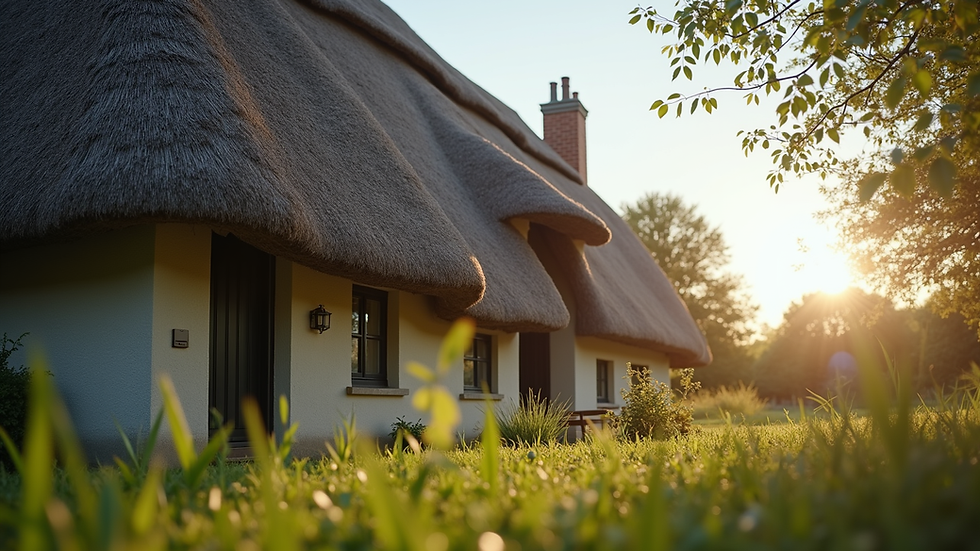
Thatched Properties Today: In today's rapidly changing architectural landscape, thatched properties have transcended their historical roots and taken on a new identity – one associated with prestige and affluence. Thatched cottages, once the epitome of modest country living, have become coveted symbols of a luxurious lifestyle. These charming homes are often sought after by those who appreciate the unique blend of history, character, and craftsmanship that thatched roofs bring.
The demand for thatched properties in the UK has surged in recent years, and owning one is seen as a statement of both individuality and status. The meticulous maintenance required for thatched roofs, along with the scarcity of skilled thatchers, has driven up their value. Thatched homes are now considered prime real estate, and their market value reflects the craftsmanship and authenticity they embody.
For many, living in a thatched property is not just about owning a house; it's about owning a piece of living history. These homes offer a connection to a bygone era while providing all the modern comforts expected by discerning homeowners. Whether it's the picturesque charm, the romantic allure, or the sense of nostalgia that draws buyers in, one thing is clear – thatched properties in Britain have evolved from humble abodes to cherished symbols of affluence and a link to a time when life was simpler and more idyllic.
Conclusion: The history of thatch roofing in Britain is a testament to the enduring charm and practicality of this ancient roofing method. From its humble beginnings in the Bronze Age to its revival in the 20th century, thatch roofing has left an indelible mark on the British landscape. So, the next time you come across a thatched cottage nestled in the English countryside, take a moment to appreciate the rich history woven into its iconic roof. It's a reminder of a bygone era that still lives on today.
Reed Roofing and it's Master Thatchers have deep roots in the traditional craft of thatching, and is committed to preserving and continuing the cultural heritage of thatch roofing in the modern era. With a strong dedication to craftsmanship and authenticity, Reed Roofing not only excels in providing high-quality thatch roof services but also takes pride in passing down this ancient skill to future generations. Through our training programs, we ensure that the art of thatching is not lost to time. Our commitment to training apprentices in the intricate techniques of thatch roofing underscores our passion for preserving this rich heritage and ensuring that it thrives for many years to come.
Don't forget our Autumn sales promotion, for more details check out our website, www.reedroofing.co.uk.


Comments